Educational library

Articles

Choose a topic or search by words in a title or description. Every guide keeps its sources, practical steps, and safety limits visible.

Quick search

Find a guide for your question

47 guides shown

Topic pathway

Nutrition

Balanced eating, proteins, fats and carbohydrates, portions, food choices, and practical everyday nutrition without unnecessary extremes.

Open topic page

Balanced Nutrition Without Rigid Diets or Food Rules

What balanced eating can look like in ordinary life: enough food, variety, protein, fiber, simple meals, and flexibility without a list of perfect foods.

Read article
Topic pathway

Eating Behavior

Hunger and fullness, emotional eating, cravings, restriction, guilt, and a calmer relationship with food.

Open topic page

Emotional Eating: Hunger, Stress, or Both?

How to notice physical hunger, emotional load, context, and previous restriction without turning a pause before eating into another rigid food rule.

Read article
Topic pathway

Physical Activity

Strength work, walking, cardio, mobility, gradual progression, and ways to make movement part of ordinary life.

Open topic page

Movement for Health When You Are Not Training Like an Athlete

How to make physical activity part of ordinary life through walking, strength work, gradual progression, and realistic training without turning health into a performance test.

Read article
Topic pathway

Sleep and Recovery

Sleep rhythm, rest, workload, stress, recovery, and the difference between everyday sleep support and problems that need professional assessment.

Open topic page
A Sleep Routine Without Perfectionism

How to support sleep with one realistic anchor, a calmer evening, and gradual adjustment instead of trying to build a perfect bedtime routine overnight.

Read article
Nighttime illustration of a moon, a resting body, and a nervous system gradually settling

Insomnia, Stress, and the Nervous System

Why the body can feel exhausted while the brain stays alert, what keeps insomnia going, and how to build a safer evening rhythm.

Read article
Topic pathway

Habits, Discipline, and Sustainable Change

How environment, identity, self-support, discipline, and personal values can make lifestyle change easier or harder to sustain.

Open topic page

A Healthy Lifestyle Without Extremes: Where to Start

A practical way to improve health without trying to rebuild everything at once: review the basics, choose one realistic step, and plan how to return after a difficult day.

Read article

Healthy Habits Without All-or-Nothing Thinking

How to build one repeatable habit, define a minimum version for difficult days, and return after a missed day without punishment or compensation.

Read article
Topic pathway

Safety and Special Situations

When general lifestyle advice is not enough: symptoms, disease, injuries, medications, pregnancy, eating disorders, and other individual constraints.

Open topic page
Before You Start a Diet, Training Plan, Supplement, or Procedure

A safety-first framework for new health experiments: define the goal, dose or intensity, personal risk factors, and stop signals before you begin.

Read article

Daily Habits and Disease Prevention: What Lifestyle Can and Cannot Do

A practical view of prevention through nutrition, movement, sleep, risk reduction, vaccination, screening, and timely medical care—without promising control over every illness.

Read article
Emergency safety illustration with a medical cross, heartbeat line, and alert symbol

When You Should Not Blame a Symptom on Stress: Red Flags

Chest pain, fainting, severe shortness of breath, bleeding, sudden neurologic changes, and other signs that require urgent medical attention.

Read article
Topic pathway

Body–Mind Foundations and Safe Support

How biological, psychological, behavioral, and social factors can interact—and how to keep medical assessment and safety in view.

Open topic page
Abstract illustration showing biological, psychological, and social factors surrounding a human body

Psychosomatics: What It Really Means—and What It Does Not

A clear guide to the biopsychosocial model, real physical symptoms, medical evaluation, and the role of psychological support.

Read article
Emergency safety illustration with a medical cross, heartbeat line, and alert symbol

When You Should Not Blame a Symptom on Stress: Red Flags

Chest pain, fainting, severe shortness of breath, bleeding, sudden neurologic changes, and other signs that require urgent medical attention.

Read article
Illustration of a seven-step path connecting medical, physical, emotional, and social support

A Support Plan for Body and Emotions: Where to Start

A seven-step plan for medical safety, symptom tracking, nervous-system support, psychological care, and ongoing review.

Read article
Topic pathway

Anxiety, Panic, and the Nervous System

How threat responses affect the body, why sensations can amplify fear, and how to regain steadiness after safety is considered.

Open topic page
Illustration of an anxiety wave gradually settling around a grounded figure

Anxiety and Physical Symptoms: Breaking the Fear Cycle

How anxiety can intensify dizziness, muscle tension, stomach distress, and body monitoring—and what helps after medical safety is addressed.

Read article
Abstract body silhouette with waves representing stress activation and recovery

How Stress Affects the Body: Nervous System, Symptoms, and Recovery

Why stress can show up as muscle tension, headaches, stomach symptoms, palpitations, sleep disruption, and fatigue.

Read article
Heart and breathing illustration divided between an alert signal and a calming wave

Palpitations, Shortness of Breath, and Panic: Anxiety or Medical Danger?

How panic can resemble a heart or breathing emergency, what red flags require 911, and how to respond after medical safety is established.

Read article
Topic pathway

Pain and Muscle Tension

How pain may interact with stress, fear, protective tension, jaw clenching, neck strain, and shoulder load.

Open topic page
Illustration of head, jaw, neck, and shoulder muscles with areas of tension highlighted

Headaches, Jaw Tension, and Tight Shoulders

How stress, posture, sleep, jaw clenching, screen work, and muscle sensitivity may interact—and when a headache needs urgent evaluation.

Read article
Nervous system pathways and protective signals surrounding a body in pain

Pain, Emotions, and the Nervous System: Why Pain Is Always Real

How tissue signals, nervous-system sensitivity, sleep, stress, fear, and social context can interact in acute and chronic pain.

Read article
Topic pathway

Digestion and the Gut–Brain Axis

A balanced view of digestive symptoms, disorders of gut–brain interaction, stress, and eating behavior without self-diagnosis.

Open topic page
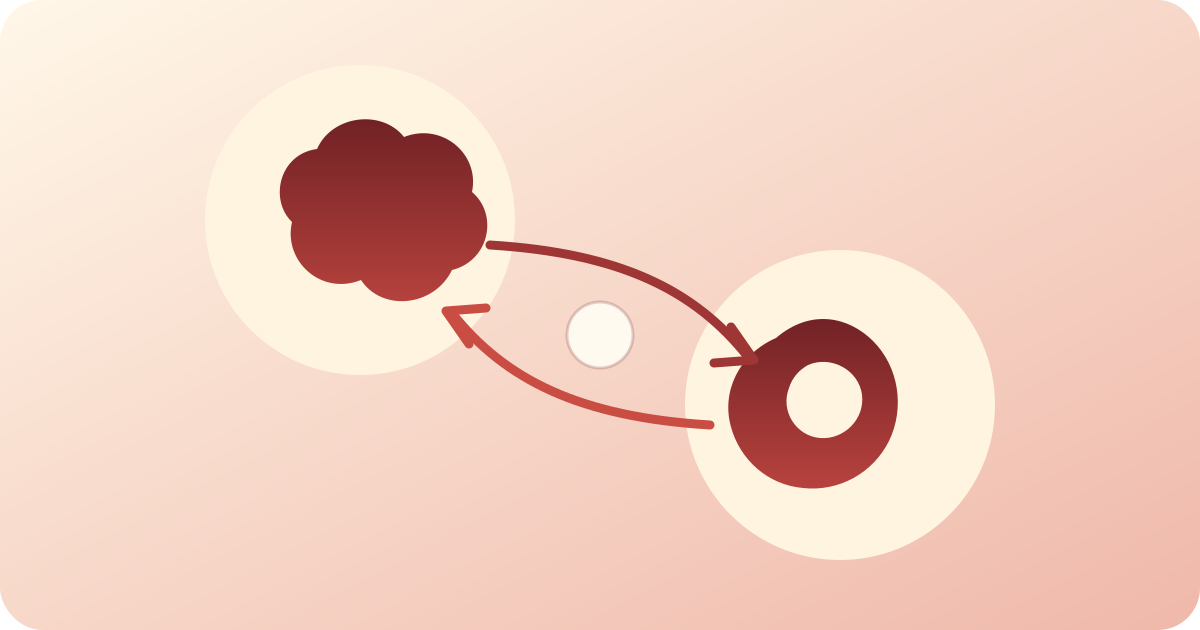
Illustration linking the brain, nervous system, and digestive tract

Emotions, Stress, and Digestion: The Gut–Brain Connection

How the brain and digestive tract communicate, why stress may change appetite and bowel function, and when symptoms need medical evaluation.

Read article
Gut–brain axis illustration with bidirectional signals between brain and bowel

Irritable Bowel Syndrome and the Gut–Brain Axis

Why IBS is a real disorder of gut–brain interaction, how it is diagnosed, and how medical, dietary, and behavioral treatments may work together.

Read article
Topic pathway

Daily Support and Boundaries

How workload, relationships, responsibility, and personal boundaries may affect tension and recovery.

Open topic page
Illustration of a person creating a safe boundary while shoulders relax

Personal Boundaries and Physical Tension

How chronic overcommitment, conflict vigilance, and difficulty saying no may contribute to overload—without turning tension into a symbolic diagnosis.

Read article
Topic pathway

Psyche and Psychotherapy

Psychotherapeutic approaches, psychological processes, and ways to speak about inner experience without confusing professional practice with symbolic interpretation.

Open topic page

How to read Psyche: psychotherapy, archetypes, and authorial interpretation

A practical editorial framework for separating psychotherapy, psychological concepts, Jungian or archetypal interpretation, and cultural reflection.

Read article
Topic pathway

Depth Psychology

Jungian traditions, the unconscious, symbol, the shadow, individuation, and related concepts presented with their theoretical frame visible.

Open topic page

What is the shadow in Jungian psychology—and how can you notice it in yourself?

The Jungian shadow as a way to think about traits, feelings, needs, and capacities that do not fit our usual self-image—without turning the idea into a diagnosis.

Read article

10 questions to explore your shadow without turning interpretation into a verdict

Ten questions for reflecting on inner rules, strong reactions, social identity, admiration, and disowned qualities—with curiosity rather than self-accusation.

Read article

Signs you may be rejecting a part of yourself

Rigid self-rules, shame around ordinary needs, social roles, and the gap between what you feel and who you believe you must be—explored without turning a symbolic idea into a diagnosis.

Read article

The shadow is not your ‘dark side’: what we may hide from ourselves

Why the Jungian shadow is broader than aggression or shame—and how courage, creativity, ambition, visibility, and vulnerability can also be disowned.

Read article
Topic pathway

Self-worth and shame

How conditional approval, criticism, and early emotional neglect may shape self-worth without turning the past into a verdict.

Open topic page

A person separating a dark critical voice from a calmer, supportive internal response.

The Inner Critic: How to Replace Self-Attack With Accurate Accountability

How a harsh internal voice turns mistakes into verdicts about your worth—and how to respond with facts, protection, and a workable next step.

Read article
A woman sitting between shadow and warm sunlight as she reflects and rebuilds her sense of self-worth.

Toxic Shame: Rebuilding a Sense of Self-Worth

How to separate responsibility from the belief that something is fundamentally wrong with you and respond to mistakes without self-humiliation.

Read article
A person setting aside symbols of achievement and accepting a warm gesture of support.

The Need to Earn Love: When Worth Depends on Usefulness and Achievement

Why care can feel like a debt, how conditional approval may shape self-worth, and how to practice receiving support without proving your value first.

Read article
A tired woman at an overloaded work desk feeling pressure from high standards.

Perfectionism and Achievement-Based Worth: Why Rest Can Cause Guilt

How high standards can become fear of mistakes, why worth may feel tied to results, and how to practice responsibility without constant self-pressure.

Read article
Topic pathway

Boundaries and people-pleasing

Why saying no may feel unsafe, how the good-child role can continue in adulthood, and how to practice proportionate boundaries.

Open topic page

A person calmly holding a boundary while another person expresses disappointment without threatening them.

Fear of Disappointing Others: How to Tolerate Disapproval Without Abandoning Yourself

Why another person’s disappointment can trigger guilt, panic, or immediate compliance—and how to separate empathy from responsibility for everyone’s feelings.

Read article
A woman at a crowded desk overwhelmed by other people's requests while trying to notice her own limits.

People-Pleasing: Why Disappointing Someone Can Feel So Dangerous

Why automatic agreement may be a protective strategy, how to notice your own no, and how to tolerate another person's disappointment without self-betrayal.

Read article
A person calmly protecting personal space with a clear stop gesture.

Personal Boundaries After a Childhood Without Enough Safety

Why saying no may activate fear or guilt, how to identify your limits, and how to communicate them without cruelty or self-betrayal.

Read article
An adult stepping out of a small neat frame and allowing themselves to take up more space.

The “Good Child” Role in Adulthood: When Being Easy Becomes Self-Erasure

How being quiet, helpful, and low-maintenance can become an adult pattern of hiding needs, avoiding conflict, and losing contact with your own preferences.

Read article
Topic pathway

Closeness and abandonment fear

How older expectations of loss, distance, or emotional unavailability may become active in adult relationships.

Open topic page

Childhood Trauma: How Early Experiences Can Shape Adult Life

Childhood Trauma: How Early Experiences Can Shape Adult Life

How possible effects of childhood trauma may appear in emotions, self-worth, and relationships—without self-diagnosis, self-blame, or fatalistic conclusions.

Read article
A woman calming herself on a couch beside an emotionally distant partner.

Fear of Abandonment: How Early Experience Can Affect Closeness

Why distance, delayed replies, or conflict may trigger panic—and how to distinguish an old expectation from a present relationship problem.

Read article
An adult daughter facing an emotionally closed older woman during a difficult conversation.

When Parents Could Not Handle Your Emotions

How repeated dismissal, punishment, or avoidance of a child's feelings may shape adult emotional regulation—and how to develop a safer relationship with emotion.

Read article
Topic pathway

Protective responses and overload

Emotional numbing, freeze, hyper-independence, triggers, and early responsibility as possible forms of adaptation.

Open topic page


A person grounding through the senses during a strong emotional reaction.

Emotional Triggers: What They May Be Showing You

How to recognize an old protective response, reduce the intensity of a reaction, and regain choice between emotion and action.

Read article
A tired young woman managing family tasks at a kitchen table beside children's belongings.

Parentification: When a Child Became the Adult in the Family

How excessive responsibility for parents, siblings, or family stability may continue into adult life—and how to return responsibility to the right place.

Read article
A woman wrapped in a warm blanket gradually reconnecting with her body and the present moment.

Emotional Numbing: Why You May Feel Nothing After Too Much Stress

Why prolonged stress may reduce access to feelings, how numbing differs from calm, and how to reconnect with the present without forcing emotion.

Read article
A woman carrying many items alone while another person carefully offers help.

Hyper-Independence: Why Asking for Help Can Feel Unsafe

How excessive self-reliance may protect against disappointment, why support can trigger tension, and how to test trustworthy help without losing autonomy.

Read article
Topic pathway

The inner child and emotional needs

Using the inner-child metaphor to notice needs without treating it as literal memory recovery.

Open topic page


An adult woman in a warm room placing a hand on her chest while listening for her own feelings.

Childhood Emotional Neglect: Why It Can Be Hard to Know What You Want

How limited attention to feelings and needs may shape adult life, and how to rebuild contact with yourself without forcing certainty.

Read article
An adult gently supporting a symbolic younger part of the self in a warm, safe setting.

How to Listen to Your Inner Child

A grounded way to notice old emotional needs, separate past experience from the present, and respond with adult support.

Read article
An adult daughter facing an emotionally closed older woman during a difficult conversation.

When Parents Could Not Handle Your Emotions

How repeated dismissal, punishment, or avoidance of a child's feelings may shape adult emotional regulation—and how to develop a safer relationship with emotion.

Read article
Topic pathway

Achievement, mistakes, and rest

Perfectionism, fear of mistakes, guilt about rest, and the habit of linking worth to usefulness or performance.

Open topic page
A person separating a dark critical voice from a calmer, supportive internal response.

The Inner Critic: How to Replace Self-Attack With Accurate Accountability

How a harsh internal voice turns mistakes into verdicts about your worth—and how to respond with facts, protection, and a workable next step.

Read article
An adult stepping out of a small neat frame and allowing themselves to take up more space.

The “Good Child” Role in Adulthood: When Being Easy Becomes Self-Erasure

How being quiet, helpful, and low-maintenance can become an adult pattern of hiding needs, avoiding conflict, and losing contact with your own preferences.

Read article
A person setting aside symbols of achievement and accepting a warm gesture of support.

The Need to Earn Love: When Worth Depends on Usefulness and Achievement

Why care can feel like a debt, how conditional approval may shape self-worth, and how to practice receiving support without proving your value first.

Read article
A tired woman at an overloaded work desk feeling pressure from high standards.

Perfectionism and Achievement-Based Worth: Why Rest Can Cause Guilt

How high standards can become fear of mistakes, why worth may feel tied to results, and how to practice responsibility without constant self-pressure.

Read article
Topic pathway

Family roles and responsibility

How a child can become a parent’s support system, mediator, ally, or rescuer—and how adults can separate love from responsibility for another person’s life.

Open topic page

Why Do I Feel Responsible for My Mother’s Happiness?

Why your mother’s sadness, loneliness, or disappointment can feel like your assignment—and how to separate love and support from responsibility for another adult’s life.

Read article
A tired young woman managing family tasks at a kitchen table beside children's belongings.

Parentification: When a Child Became the Adult in the Family

How excessive responsibility for parents, siblings, or family stability may continue into adult life—and how to return responsibility to the right place.

Read article

Caught Between Parents: Peacemaker, Messenger, or Ally

What happens when a child is pulled into conflict between parents, asked to carry messages, choose a side, or take responsibility for keeping the family calm.

Read article

I Keep Rescuing My Family: Where Does My Responsibility End?

How to tell the difference between supporting family and repeatedly taking over their debts, conflicts, health decisions, or consequences.

Read article

When a Child Becomes a Parent’s Emotional Partner

How a child can become a parent’s main confidant, ally, or emotional support—and why that role may complicate adult relationships later on.

Read article

Why Do I Feel Guilty Living Better Than My Parents?

Why earning more, having a happier relationship, moving away, or choosing a different life can trigger family guilt—and how to stay connected without repeating hardship.

Read article